2026 Hong Kong School AI Tool Procurement Guide: Top 10 Procurement Criteria for the 500, 000 "Smart Education" Grant
Since the Education Bureau (EDB) launched the "Smart Start Learning and Teaching Funding Scheme" (Extended understanding:Turn the 500, 000 grant into real teaching power), the mailboxes of many school principals, vice principals, curriculum directors, IT coordinators, etc. are probably filled with various AI solutions. From robots that can write poems to platforms that can correct essays, the variety is dizzying. In 2026, when technology is rapidly iterating, how can the school transform its budget into teaching assets with long-term benefits?
1. Strategy: School-based Blueprint and Development Vertical Axis
1. Support “interdisciplinary, multi-scenario” application capabilities
The selected AI tools must have cross-disciplinary versatility to meet the compliance requirements of the Education Bureau of "at least 3 subjects implemented and 6 teaching examples".
Scale effect:Priority will be given to interdisciplinary teaching systems, or devices that can be used mobilely in classrooms, auditoriums, STEM rooms, and activity rooms, such as immersive VR virtual reality application systems/interactive education systems combined with AI.
Guide to avoid pitfalls:Avoid purchasing a tool with a single function (such as English correction only) unless the tool has irreplaceable depth in a specific field.
Motive Force's teaching solutions are highly flexible, using AI content creation software, a variety of interactive devices, and hundreds of ready-to-use content libraries to support the learning needs of different subjects and grades.
2. Positioning the "vertical axis" of school development: sustainable development strategy
Should the allocation be spent all at once, or invested in installments?
It is recommended that the 500, 000 allocation be used in phases. Generally speaking, schools can first use existing lesson plans and teaching processes and introduce tools that can immediately improve classroom effectiveness; then expand to more subjects and grades; and finally enter the development stage, using AI to assist teachers in creating new school-based lesson plans and learning activities, and gradually build a cumulative teaching ecosystem.
Tool sustainability is key
The selected tools must have the ability to be repeatedly applied across subjects and grades, and can continue to produce new content as the school develops. Some schools will choose a solution such as Motive Force that combines content extensibility and AI lesson plan generation with an interactive education system as its core, so that the same platform can continue to deepen its use according to the school's needs, instead of being forced to replace the system when the plan is upgraded, thus converting funds into long-term accumulable teaching assets.
2. Effectiveness: Teacher Empowerment and Administrative Stress Reduction
3. Powerful AIGC automatic generation capability: achieving true empowerment
AIGC (generative artificial intelligence) automatically produces teaching resources, directly reducing teachers’ technical and time thresholds.
Application scenarios:Give priority to platforms that can generate text, sound, graphics, animation and other teaching materials, interactive Q&A, 360° scenes or VR courses with one click.
Key to implementation:Only tools that can help solve the difficulties of cross-subject content production can truly reduce teachers' lesson preparation burden.
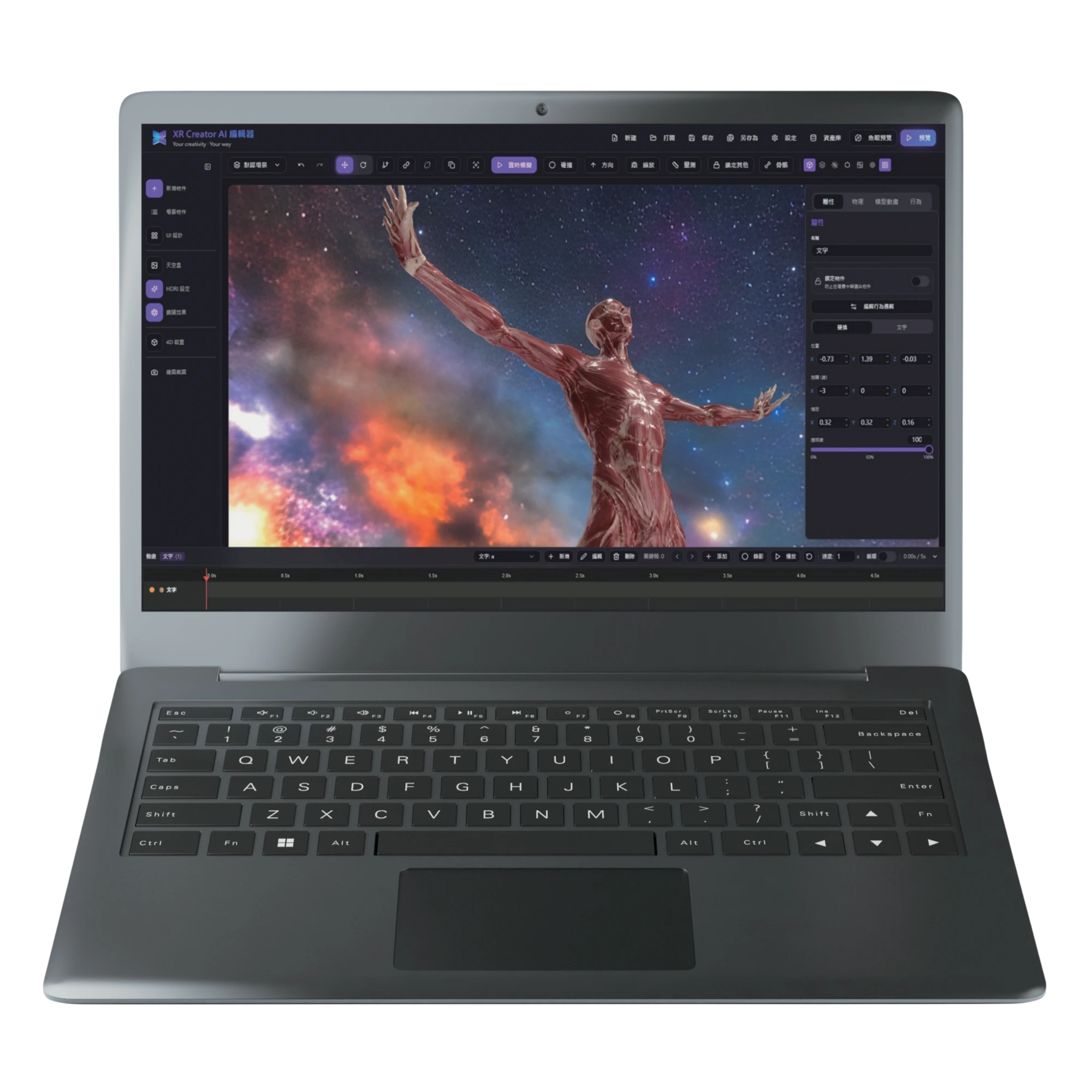
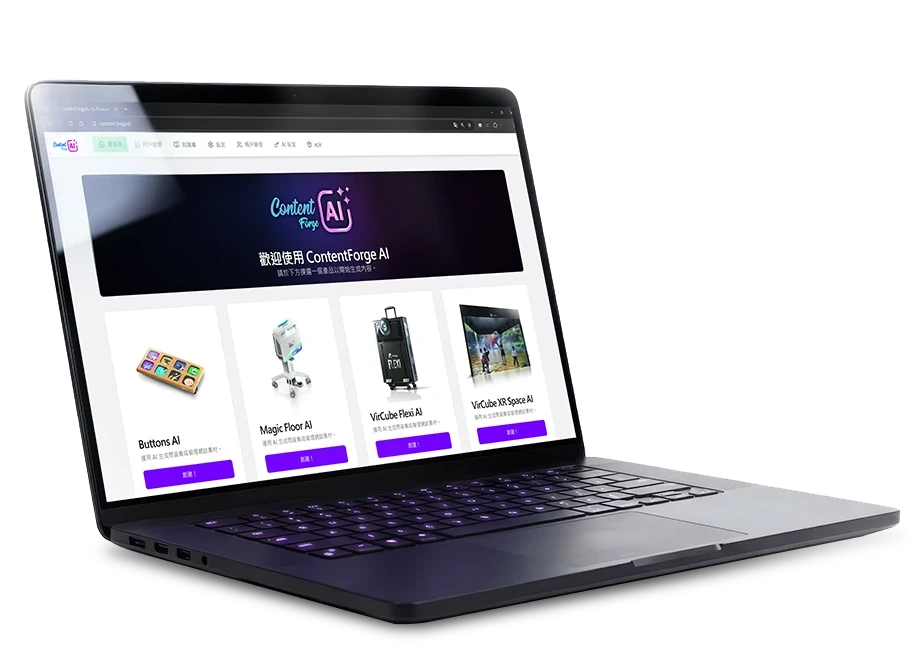
Motive Force's AI content creation platform includes Content Forge AI and XR Creator AI. Teachers only need to input topics to generate 360° immersive teaching materials or interactive Q&A with one click, completely liberating the stress of lesson preparation.
4. Pursue "integrated solutions": reduce management and contract renewal costs
What risks do fragmented AI tools pose? Fragmented tools can lead to data gaps, confusing account management, and unaffordable cumulative subscription fees. Schools should choose a single system that integrates immersive learning, gamified Q&A, and learning data analysis. At the same time, long-term subscription costs need to be reviewed and providers required to provide concurrent teacher professional development (CPD) training.
Motive Force's one-stop solution integrates interactive devices, AI software and teacher training.
3. Students: Initiative and literacy cultivation
5. Immersive experiential learning: stimulating student initiative (Agency)
AI tools should not only provide answers, but create an environment that triggers students’ desire for exploration and curiosity. Through the "diversified educational technology devices + ready-to-use courses + interactive experiences" program, students can personally enter the Chinese story scene or the microscopic world of science for experiential learning. This model of actively exploring knowledge is the key to improving students' learning subjectivity.
Motive Force allows students to actively explore the world in a safe environment through XR spaces that require no headgear and allow multiple people to collaborate, transforming passive reading into immersive and active exploration.
6. Support "whole class teaching" and large-scale activity applications
Excellent AI solutions need to have the ability to expand to campus collective activities:
Application flexibility:Consider whether the tool supports cross-class and cross-level teaching activities, such as STEAM weeks, open days, carnivals or cross-subject project learning.
Value reflected:Tools that can demonstrate results at large-scale events will also help demonstrate the social and educational value of funding to school boards and parents.
Motive Force's teaching system supports multi-person interaction. In addition to daily group teaching, it can also be used as a technological highlight for the whole school to display during open days or STEM weeks.
7. Internalize AI literacy and information ethics education
Does the teaching platform have space to discuss the limitations of AI (e. g. bias, misinformation)? The core of education is to cultivate "responsible users". Tools should guide students to develop critical thinking and identify technical risks, thereby internalizing AI literacy as students’ core competencies.
Motive Force's lesson plan design incorporates critical thinking and guides students to analyze content after it is generated, making AI a living teaching material for cultivating information literacy.
4. Implementation: On-the-ground support and empirical data
8. Choose a partner with long-term support from a local team
Can the supplier provide timely content updates based on the Hong Kong curriculum syllabus (such as transformation of humanities and science subjects)? The local team can provide Cantonese technical support and on-campus training, which is the cornerstone to ensure the stable operation of the three-year plan and avoid hardware "dusting". In practice, some schools will give priority to suppliers that have experience in school-based implementation in Hong Kong and can combine XR and AIGC teaching applications. For example, Motive Force is one type of program that focuses on local team support and interdisciplinary immersive teaching.
9. Have empirical support for teaching effectiveness
Checklist:
[ ] Does the supplier provide actual application cases in local schools?
[ ] Does the tool have data feedback that takes into account individual learning differences?
[ ] Is there dedicated teaching logic support for the core subjects (Chinese, English and Mathematics)?
Motive Force has accumulated implementation experience in more than a hundred Hong Kong schools and can provide real school-based application cases and data to help schools easily write reports and display results. Our core software is a compulsory course at the Education University of Hong Kong.
10. Choose Open Source and Unity-free solutions
Some mainstream 3D/XR teaching products are highly dependent on a single commercial engine, Unity, and Unity announced that it will no longer provide Unity 6 and subsequent updated version services to users in China, Hong Kong and Macao. All related businesses will be undertaken by the localized "Unity Engine". For schools, this can pose multiple risks:
Account and Compliance Risk: Even if you use the international version with a VPN, there are legal risks, which will affect access rights to existing teaching content and service stability.
asset uncertainty: Materials purchased or accumulated in the past may not be guaranteed to be available for a long time after platform policies or store removal.
Content migration is extremely costly: Taking Unity content around 2020 as an example, the practical operation of transferring it to another engine is almost equivalent to "remaking".
Teaching development is limited: When the direction of engine evolution is dominated by market or policy rather than educational needs, schools’ development flexibility and autonomy in XR/AI teaching will be limited.
Adopting a solution with Open Source technology as the core, because the underlying structure is not affected by a single business engine or regional policy, can effectively avoid the above problems such as account, asset sustainability, content migration, and restricted technical routes. It is a relatively stable and sustainable choice for schools.
The driving force of Motive Force adopts an open source architecture to effectively avoid software authorization and account risks, ensuring that the school's digital teaching assets can survive for a long time and will not be invalidated due to platform changes, and can flexibly connect to different software and hardware applications in the market.
In 2026, successful purchasing decisions will not lie in chasing technology hot spots, but in building a teaching ecosystem that can automatically generate teaching materials, promote immersive interaction, and provide long-term support. It is recommended that schools take a step back to think about core needs and choose a solution that can truly "breathe a sigh of relief" to teachers and students.
Frequently Asked Questions (FAQ) about "Zhiqi Education" funding and AI procurement
Does the 500, 000 grant have to be spent in one lump sum?
In fact, diversification is often smarter than a one-time buyout. Considering that AI technology has a small iteration every six months and a major update every year, it is recommended that the allocation be allocated in three years. This not only prevents the purchase of soon-to-be-obsolete hardware (such as old-generation robots), but also ensures that schools have sufficient budget to cope with future software updates and maintenance expenses.
How to ensure that the purchased tools meet the Education Bureau’s “3+2+6” indicators?
The key lies in the "interdisciplinary versatility" of the tools. Rather than purchasing single-subject software that can only grade essays, it is better to give priority to immersive XR platforms or AIGC teaching material generation tools. This type of tool can easily span Chinese, English, mathematics, general knowledge and even STEAM classes, helping teachers develop 6 cross-grade teaching examples in a short time and easily meet reporting requirements. Judging from practical experience, if schools lack internal development resources, schools can consider integrated solutions that have built-in the above conditions (such as the design logic used by Motive Force), which can more easily meet the needs of "3+2+6" and curriculum transformation at the same time.
With so many AI tools on the market, will teachers’ lesson preparation burden increase?
A good AI tool should be a "teaching assistant" for teachers rather than an additional workload. When selecting, focus on testing its AIGC (automatically generated content) capabilities. For example: Can worksheets be generated with one click, and can 3D teaching scenes be automatically generated? If a platform requires teachers to spend a lot of time learning complex settings, then it loses its original meaning of "empowerment. "
Besides functionality, what is the most overlooked clause in a purchase contract?
It's "local support" and "content updates". Hong Kong’s curriculum (such as the transformation of humanities and science subjects) changes frequently. If the supplier does not have a local team to follow up, the platform content will soon be out of touch with the teaching. In addition, be sure to confirm whether the contract includes teacher training and a transparent renewal fee model to avoid financial gaps after the three-year funding period.
How can AI tools help schools showcase their results at Open Days?
Tools with application capabilities for "large-scale events" have the greatest advantage. For example, support immersive XR experiences or somatosensory interactive games that multiple people can participate in at the same time. This type of solution can not only be used in daily classrooms, but can also become an eye-catching highlight at open days, STEAM weeks or cultural days, allowing parents and school boards to intuitively see the teaching changes brought about by the 500, 000 grant.
Why are schools recommended to consider Unity‑free or open source (Open Source) AI/XR teaching solutions in recent years?
Mainly based on long-term stability and risk management. There are uncertainties in the version supply, account policies and technical routes of some commercial 3D/XR engines in different regions, which may affect account usage, continuation of existing materials and content migration costs. Relatively speaking, a solution that uses open source technology as its core and is not tied to a single commercial engine can effectively avoid the above problems, allowing teaching content and materials to be retained for a long time and not easily invalidated due to platform policy or version changes. It is more in line with the requirements for sustainability and prudent investment when promoting education development with public funds.
Related products
Explore the products mentioned in this article